
The Starting Point
When CulturalCorners launched in late 2024, the problem it was addressing was simple to state: three European regions, Cyprus, Lapland, and the Canary Islands, each rich in culture and heritage, each heavily dependent on one short season, each unable to turn that cultural wealth into a reason to visit in the off-months.
Seasonal tourism concentrates income in a few peak months. Local artists and professionals build their working year around that rhythm. Cultural assets, traditions, crafts, historic sites, stories, sit idle the rest of the time. That’s the pattern the project set out to interrupt.
The bet was that culture, taken seriously, can draw visitors year-round, not through big campaigns, but by giving local artists and tourism professionals the tools and room to work differently.
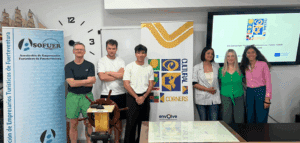
Three partners built the project together: Envolve Entrepreneurship (Cyprus, project coordinator), the Arctic Centre at the University of Lapland (Finland), and ASOFUER, the Association of Tourist Entrepreneurs of Fuerteventura (Spain). Different backgrounds, different regional realities, which turned out to matter.
What the Project Did
The first phase was research. Each partner went into their region, interviewing local artists, visiting sites, digging into archives, to document cultural heritage that doesn’t normally show up in tourism brochures. In Lapland that meant engaging with Sami culture and the realities of Arctic tourism beyond the winter peak. In Fuerteventura, looking past the beaches. In Cyprus, mapping assets that mass-market tourism has largely ignored. This gave the project a shared factual base before anything was designed.
From that base, the project built and ran a professional development programme for artists and cultural professionals across Europe. Over 120 people took part in training on four topics: sustainable tourism methods, integrating local heritage into tourism offerings, digital tools for visitor experience, and off-season customer engagement. Four online modules, certification at the end.
The experimental phase asked each partner region to host brainstorming workshops, one per country, bringing in 20 to 30 local experts, artists, and business owners to work through what cultural tourism in their area could look like in the low season. The ideas that came out of those workshops went into prototype programmes and events, tested in real conditions. Results were measured and fed back into a final sustainability analysis.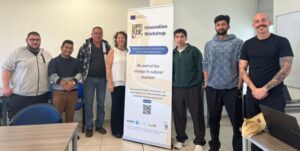
The project also ran three open online workshops during the two years, on visitor experience design, community participation and heritage, and digital tools in destination management. These reached participants beyond the three partner regions and built the wider network the project will leave behind.
What We Observed Along the Way
A few things stood out.
Open workshops produce different results. The brainstorming sessions were designed so that decisions hadn’t already been made before people arrived. That created some friction, unexpected directions, ideas that required rethinking the approach, but the prototypes that came out had genuine local support, which is harder to manufacture after the fact.
Upskilling on tools was the easier part. The training programme went in expecting digital tools to be the main challenge. In practice, participants needed more help with the framing question, who comes in January, and why, than with the tools themselves. Once that shifted, the digital side followed.
The three regions don’t share the same problem. Lapland’s seasonality is driven by climate and is shaped by indigenous cultural considerations that sit outside standard tourism frameworks. Fuerteventura carries a mass-tourism legacy that reframes slowly. Cyprus works in a different economic and political context. A single model doesn’t fit all three, and the project had to stay flexible about that.
What Comes Next
The Cultural Tourism Innovation Labs in each partner region are set up to keep running after EU funding closes. The toolkit developed through WP5, a step-by-step guide to setting up and managing similar labs, will be publicly available for other regions to pick up and adapt.
The training materials remain accessible. The network that formed across the workshops and webinars, participants from tourism boards, cultural organisations, and local governments across a dozen countries, is probably the least visible output of the two years and one of the more durable ones.
For Envolve, CulturalCorners ran alongside other EU projects in entrepreneurship and acceleration. What it added was a specific focus on creative and cultural sectors in peripheral regions, places where the usual startup and SME playbook doesn’t quite fit, and where the cultural dimension of economic activity tends to get overlooked.
CulturalCorners (GA 101173766) is co-funded by the European Union under the Creative Europe Programme.
Partners: Envolve Entrepreneurship (Cyprus) · Arctic Centre, University of Lapland (Finland) · ASOFUER (Spain)